
Achieving transformational change with leadership skills
At Martin House Children's Hospice, we have supported families across Yorkshire since 1987, offering specialist palliative care to more than 550 children and young people with life-shortening conditions each year. Our mission is to ensure that every child and young person visiting the hospice receives expert, compassionate care when and where they need it, and that every family facing the unimaginable feels supported.
Our hospice is based in Boston Spa in Yorkshire, where our specialist team – including three paediatric palliative care consultants – delivers specialist paediatric palliative care including symptom management, end of life care, short breaks, care after death and bereavement services. We deliver care in our 15 bedded hospice facility and in community settings – the child's home or acute hospitals.
Care provision is truly holistic, meeting the clinical, emotional, psychological and spiritual needs of the child and their immediate family. And it's provided at no cost to families – made possible largely through voluntary donations, which must now total more than £12 million annually to sustain services.
In 2020, we made a bold decision: to launch a £21.9 million project – THE BUILD – to future-proof our hospice and transform what specialist paediatric palliative care could look like. This wasn't about cosmetic upgrades. It was a complete rethink of how our environment could better meet the increasingly complex needs of children and their families, providing an environment that enabled outstanding care.
A new era of leadership
One of the biggest challenges in our sector is the need to lead through uncertainty. We are, at heart, an organisation which relies on kindness and generosity, which requires a strategic, innovative and resilient mindset. When we decided to launch THE BUILD, we did so knowing that the economic climate was extremely challenging – we were heading out of a global pandemic and the hospice sector was under pressure.
In preparation we consulted with stakeholders – our board, our staff, families and our supporters to establish a clear vision – THE BUILD was not just a new building, but a fundamental transformation to meet the needs of families at the hardest moments of their lives. That vision was consistently communicated and rooted in evidence, giving us the confidence to take on an ambitious project in a challenging economic climate.
This alignment didn't happen by accident. It was the product of deliberate and transparent leadership, a willingness to embrace the challenge and a commitment to bring people along at every step of the journey. That, ultimately, is what has allowed Martin House to not just manage change, but lead it, in a way that is both strategic and totally authentic.
Our strategic leadership team operates in a culture that has consistently valued collaborative, emotionally intelligent leadership. I believe this has been instrumental to our success. We've fostered a team dynamic where challenge is welcomed, emotional resilience is supported and no idea is too ambitious to explore, as long as the rationale is clear.
This authentic leadership at Martin House ensures the many moving parts have continued to work in unison, from delivering complex clinical care, fundraising and retail activity, to supporting our people and continually improving our digital capabilities and estate every function plays a vital role in delivering compassionate, coordinated support. Our shared purpose enables each person to understand their impact and act with confidence.
The power of partnerships
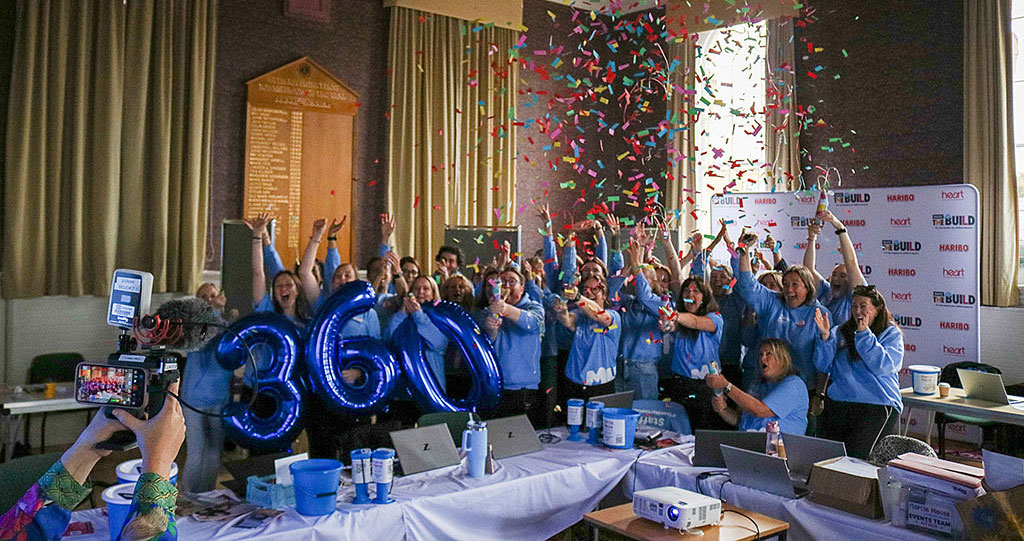
No charity achieves success alone. One of the most powerful enablers of our transformation has been partnerships, especially with Yorkshire's business community. From our headline sponsor HARIBO to many other local businesses, our corporate supporters have been central to driving both funding and advocacy.
That support hasn't come without effort. We've worked hard to reposition Martin House not just as a cause, but as a credible, professionally run partner. We understand that corporate engagement is about more than charity of the year badges. It's about values alignment, staff engagement and impact. The more we've been able to speak in that language, the more doors have opened.
Our recent fundraising events reflect that. This autumn, we hosted our annual Glitter Ball raising £212,000 in one night. Nearly 600 guests, including household names from Emmerdale to TV chef Ainsley Harriott, gathered for dinner, auctions and celebration. But it wasn't just about glamour. It was a showcase of what can happen when community and corporates stand side by side behind a cause that means something to them.
Our donor strategy evolved in real time; we created a major donor programme from scratch, led by our director of income generation, Robyn Mountain-Wade. We began hosting small private dinners with potential philanthropists, not to ask for cheques, but to build belief in our vision. That belief, in time, turned into pledges. And those pledges became a pipeline that now underpins our growth.
Sustaining wellbeing and culture
Transformational leadership is not as simple as it may sound. It places huge emotional and strategic pressure on leaders, particularly in a setting like ours, where the work is emotionally intense and the stakes are high. As CEO, I've learned that compassion must start at the top – not just for the families we support, but for our people.
We speak openly about burnout, and we prioritise reflective practice. Our clinical and non-clinical staff deal with profound human experiences daily. We've made wellbeing non-negotiable: regular check-ins, supervision, flexible working and an open culture where asking for help is not a weakness.
As leaders, we must model the balance we want others to have. That includes recognising when we are depleted ourselves. You cannot pour from an empty cup, especially when leading others through complex change in an often emotionally challenging environment.
Risk, resilience and reinvention
For any charity, I would say the greater risk often lies in inaction.
We've learned that bold decisions must be grounded in purpose, but it's leadership not just planning that enables meaningful change. Transformational leadership isn't about having all the answers at the outset; it's about creating a culture that is open to adaptation, clear on its values and aligned at every level.
For us, this meant building the internal conditions for change to thrive, strengthening our leadership capacity, empowering teams to contribute solutions, and maintaining transparency around challenges as well as progress. From service delivery to operations, we've encouraged reflective thinking, cross-team collaboration, and an openness to reimagining how things are done. It's required us to be both decisive and agile, responding to external pressures while keeping long term vision in focus.
That shift has been just as important as any physical investment. It has allowed us to remain resilient through uncertainty, make strategic choices with confidence, and stay connected to the heart of our mission – delivering expert, compassionate care to children, young people and their families.
Looking ahead
In 2026, our new hospice will open its doors. Families will experience a transformed care environment, with facilities inspired by the very people who use them and the team which works in them. There are a hydrotherapy pool, a teenage wing, sensory spaces, family support areas and an Education Centre that will allow us to share best practice in children's hospice care across the UK.
But the work doesn't end when the building is finished. It will cost £12 million a year to keep Martin House in operation. Demand is increasing. Complexity is growing. The economy remains uncertain.
A deliberate approach
Our story isn't unique, but our approach has been deliberate. We choose to lead with clarity, compassion, and courage. We embrace risk, but only after detailed planning. We built a major donor base by asking with purpose, not pressure. We prioritise our people, because their resilience underpins everything else. And we never forgot why we were doing it.
For other charity leaders, particularly in hospice care, these are the lessons I've found most valuable during our recent transformation:
- Define the "why" early and clearly. A compelling mission is your most powerful tool for alignment, motivation and resilience.
- Build a culture that can embrace change. Invest in coaching at all levels, encourage reflective practice, and normalise challenge and feedback.
- Embed wellbeing as a strategic priority. Your people are your greatest asset; they can only deliver exceptional care if they feel trusted and supported.
- Speak the language of your stakeholders. Whether engaging children, families, donors, partners or policymakers, meet them where they are and show them why they matter.
For us at Martin House, this is just the beginning.
